
Struggling to pick between 48V and 72V carts? Afraid of making a costly mistake for your fleet? I'll help you understand the key differences.
Choosing between 48V and 72V depends on your fleet's specific needs. A 72V system offers more potential power for hills and heavy loads, but a well-configured 48V cart is often the more practical and cost-effective choice for many standard commercial applications in the U.S.
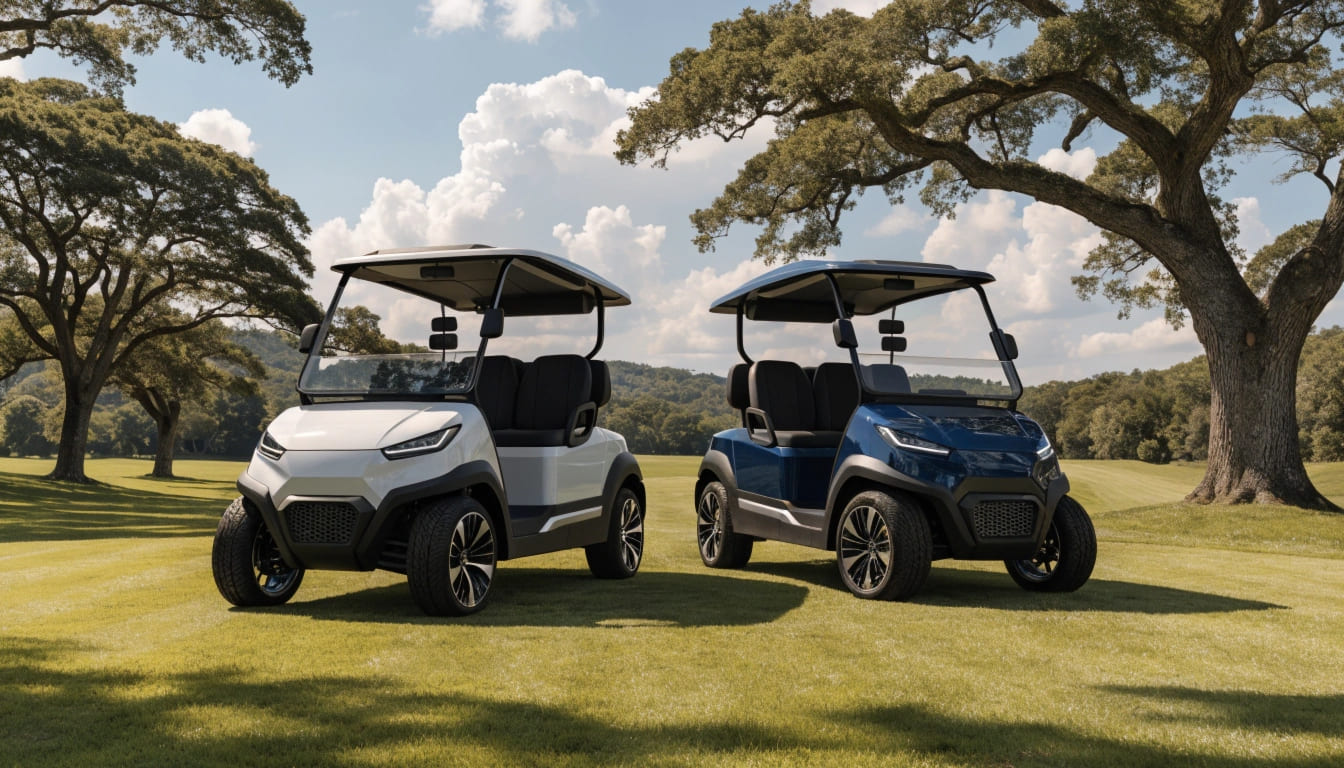
As a manufacturer, I talk to U.S. fleet managers every day. The "48V or 72V" question comes up a lot. Many people think higher voltage is automatically better, but that's not the whole story.
The best choice is not about getting the highest number. It's about matching the vehicle's entire system—voltage, battery, motor, and controller—to the real work you need it to do.
Let's break down the common questions I get to help you make a smart decision for your fleet.
Does a 72V cart always have more power and speed?
Need carts that climb hills without slowing down? Worried a 48V cart won't be strong enough? Let's look at what really delivers the power.
A 72V system generally delivers better torque and acceleration, especially on steep inclines or with heavy loads.1 However, top speed is often limited by the controller for safety2, so both 48V and 72V carts may have similar maximum speeds. Power is not just about voltage.

When a U.S. resort manager asks me for a cart that can handle a steep, winding path up to guest cabins, we start talking about 72V systems. The higher voltage allows the motor to produce more power (watts) with less electrical current (amps).3 This is a key advantage. Less current means less heat builds up in the motor and controller4, which improves efficiency and reduces stress on the components during a hard climb. Think of it like this: power is the result of voltage multiplied by current.
Power System Efficiency
| System Voltage | Power Required (e.g., 4320 Watts) | Current Drawn (Amps) | Component Stress |
|---|---|---|---|
| 48V | 4320 Watts | 90 Amps | Higher |
| 72V | 4320 Watts | 60 Amps | Lower |
This table shows that for the same power output, the 72V system works less hard. This is why it feels more powerful and responsive, especially from a standstill or on a hill. But for top speed, it's a different story. Most commercial carts are electronically limited to speeds like 15-25 mph for safety and local regulations.5 A powerful 48V cart can often reach that limit just as easily as a 72V cart on flat ground. The real difference is felt when you demand torque under load.
Will a 72V system guarantee a longer range for my fleet?
Worried about carts dying mid-day? Think 72V is the only way to get all-day range? The answer is more complex than just voltage.
No, 72V does not guarantee longer range. Range is determined by the battery's total energy capacity, measured in Watt-hours (Wh), not just voltage.6 A 48V system with high-capacity batteries can easily outperform a 72V system with standard batteries.7
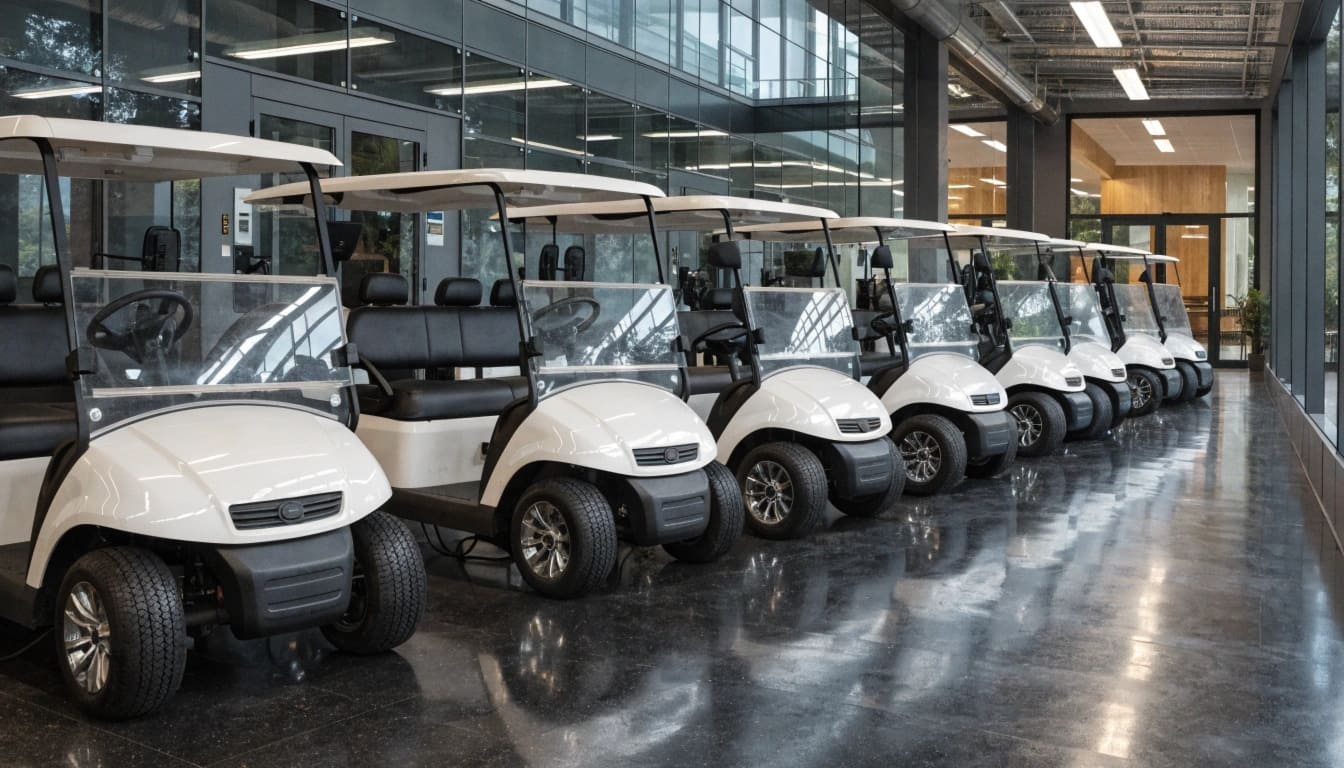
I often see buyers focus only on voltage when they ask about range. This is a common misunderstanding. The true measure of a battery's fuel tank is its total energy storage, or Watt-hours. You calculate this by multiplying the battery's voltage (V) by its capacity in Amp-hours (Ah).8 A higher Watt-hour number means more energy is stored, which translates to longer potential range. Let's look at an example. A buyer for a large community in Florida once asked for 72V carts for maximum range. After we discussed their actual daily routes, we found a better solution.
Comparing Battery Energy Capacity
| System Configuration | Voltage (V) | Capacity (Ah) | Total Energy (Wh) |
|---|---|---|---|
| Standard 72V System | 72V | 100 Ah | 7,200 Wh |
| High-Capacity 48V System | 48V | 160 Ah | 7,680 Wh |
As you can see, the "lower voltage" 48V system in this example actually stores more total energy. This means it would likely provide a longer range under the same conditions. When you are looking at quotes, don't just compare the voltage. Always ask for the Amp-hour rating of the batteries, whether they are lead-acid or lithium. This will give you a much clearer picture of the cart's endurance and help you avoid paying for a higher voltage system that doesn't actually meet your range requirements.
Is the higher cost of a 72V system always worth it for commercial use?
Is the 72V price tag justified? Concerned about the total cost of ownership for your fleet? Let's break down where the money really goes.
Not always. The higher upfront cost of 72V is for its potential performance in demanding situations. For flat terrain and standard use, a 48V system often offers a lower total cost of ownership, with more affordable replacement batteries and components.

When procuring a fleet of vehicles, the initial purchase price is just one part of the equation9. We must consider the Total Cost of Ownership (TCO) over the vehicle's life, which is typically 5-7 years for a commercial fleet. I always advise my clients to look at the complete financial picture before deciding. A 72V system has a higher cost for a reason—the motor, controller, and especially the batteries are more expensive to produce. The question is whether your operation will benefit enough from its capabilities to justify that extra cost over the long term.
Initial Investment
The price difference between a 48V and a 72V cart can be significant, especially when buying multiple units. This is due to the more robust components needed to handle the higher voltage. For a golf course with mostly flat fairways, that extra initial expense on a 72V fleet might be better spent on other amenities or higher-capacity 48V batteries.
Long-Term Maintenance
Battery replacement is the largest long-term cost for any electric fleet.10 A 72V system, whether lead-acid or lithium, will generally have a more expensive battery pack to replace than an equivalent 48V system. For a fleet of 20, 50, or 100 carts, this difference adds up to a very large number over the years. Common 48V components are also widely available and often more affordable, which can simplify maintenance and reduce downtime.
How do I choose the right voltage for my specific operating conditions?
Feeling overwhelmed by technical specs? Unsure how to match a cart to your resort, campus, or industrial park needs? I'll give you a simple framework.
Start by defining your use case. Analyze your daily mileage, terrain steepness, typical load, and charging availability.11 Based on these factors, we can determine if the performance benefits of a 72V system are necessary, or if a robust 48V configuration is the better fit.

This is the exact checklist I walk through with my U.S. clients to help them build the right fleet configuration. Instead of starting with the cart's specs, we start with the job's demands. It's a simple process that removes the guesswork. You should answer these questions about your own operations before you request quotes. This information will help any manufacturer, including me, recommend the perfect vehicle instead of just selling you the most expensive one.
Your Fleet's Operational Checklist
| Operational Factor | Ask Yourself... | If "High Demand," Consider... | If "Standard Demand," Consider... |
|---|---|---|---|
| Terrain | Does the cart need to climb steep hills daily? (>15% grade) | 72V for better torque | 48V is sufficient |
| Load | Will it regularly carry 4+ people, heavy tools, or tow loads? | 72V for power under load | 48V works well |
| Daily Mileage | Does your fleet run continuously all day with little downtime? | High-capacity battery (any V) | Standard battery (any V) |
| Performance Feel | Do you need quick acceleration for user satisfaction? (e.g., resort) | 72V for responsiveness | 48V is smooth and adequate |
| Budget | Are you focused on the lowest TCO over 5-7 years? | 48V for lower costs | 48V is the budget choice |
By honestly assessing these four areas, you can build a clear profile of your needs. If your answers fall mostly in the "High Demand" column, then investing in a 72V system is a smart choice. If they are mostly "Standard Demand," a well-built 48V cart with the right battery capacity will serve you perfectly and save you money.
Conclusion
Ultimately, the best choice isn't 48V or 72V. It's the system that best matches your fleet's daily work, terrain, and budget for the long term.
A neutral engineering or EV source can substantiate why higher-voltage systems can support stronger performance under load or on grades. ↩
A safety or regulatory source can confirm that low-speed electric vehicles and carts are commonly speed-limited and explain the safety rationale. ↩
A basic electrical-engineering reference can verify that electrical power is calculated from voltage and current, supporting the lower-current point. ↩
A source on Joule heating or I²R losses can support the claim that reducing current can reduce resistive heat losses. ↩
NHTSA or state transportation sources can verify regulated speed ranges for low-speed vehicles and golf carts. ↩
An EV or battery reference can confirm that watt-hours/kilowatt-hours measure stored energy and are central to range estimates. ↩
A neutral battery or EV source can support the principle that total energy capacity, not voltage alone, determines potential range. ↩
A battery-technology reference can validate the watt-hour calculation used in the example table. ↩
Government or fleet-management guidance can support using TCO as a broader procurement metric. ↩
A fleet-cost or battery lifecycle source can substantiate the importance of battery replacement in long-term electric fleet costs. ↩
Fleet electrification guidance from a government or research institution can validate these operational factors as relevant selection criteria. ↩

